 Save
Save The first time I made this dish, I was standing in my kitchen on a Tuesday evening, half-watching a cooking show about desserts when something clicked—what if you could take that caramelized sugar crust from crème brûlée and put it on chicken? It felt ridiculous and brilliant at the same time. Twenty minutes later, I was holding a kitchen torch to a chicken breast, listening to that satisfying crack of sugar giving way to tender, golden meat. My kitchen smelled like lemon zest and burnt sugar in the best possible way, and I knew I'd stumbled onto something special.
I made this for my sister last month when she was going through a rough patch, and watching her face when she took that first bite—when she hit the brûléed crust and then tasted the creamy lemon sauce—made her actually smile for the first time in days. She didn't say much, just kept eating and shaking her head a little, and that moment reminded me why I love cooking. It's not about perfection; it's about creating something that makes people feel seen.
Ingredients
- Boneless, skinless chicken breasts: Pat them completely dry before searing—this is what gives you that golden, caramelized exterior that the sugar crust will cling to.
- Granulated sugar: Don't use superfine sugar here; you need regular granulated to get that satisfying crackle when you torch it.
- Lemon zest: Use a microplane or zester to get those thin, delicate strands that distribute evenly; box graters are too rough for this.
- Linguine or spaghetti: The thin strands catch the creamy sauce perfectly, but honestly, any long pasta works if that's what you have.
- Heavy cream: Full-fat cream is essential here—don't try to skimp with half-and-half or you'll lose that luxurious mouthfeel.
- Parmigiano-Reggiano: Real aged Parm makes all the difference; the sharp, nutty flavor balances the lemon brightness.
- Fresh lemon juice and zest: Get at least two good-sized lemons; one won't be enough, and bottled juice tastes flat by comparison.
Tired of Takeout? 🥡
Get 10 meals you can make faster than delivery arrives. Seriously.
One email. No spam. Unsubscribe anytime.
Instructions
- Dry and Season Your Chicken:
- Pat those breasts with paper towels until they're genuinely dry—moisture is the enemy of a good sear. Season generously with salt, pepper, and lemon zest, letting the flavors sit on the surface for a moment before you cook.
- Sear Until Golden:
- Get your skillet screaming hot with olive oil, then lay the chicken down and don't touch it for a solid 4-5 minutes. You'll hear it sizzle and smell that nutty, caramelized aroma—that's when you know it's working. Flip once and cook another 4-5 minutes until the chicken is almost cooked through.
- Brûlée the Sugar:
- Sprinkle about a tablespoon of sugar on top of each breast while it's still in the pan. If you have a kitchen torch, this is your moment to shine—hold it a few inches away and watch the sugar turn golden and bubbly. If you're using a broiler, be vigilant because it can go from golden to burnt in seconds.
- Rest and Slice:
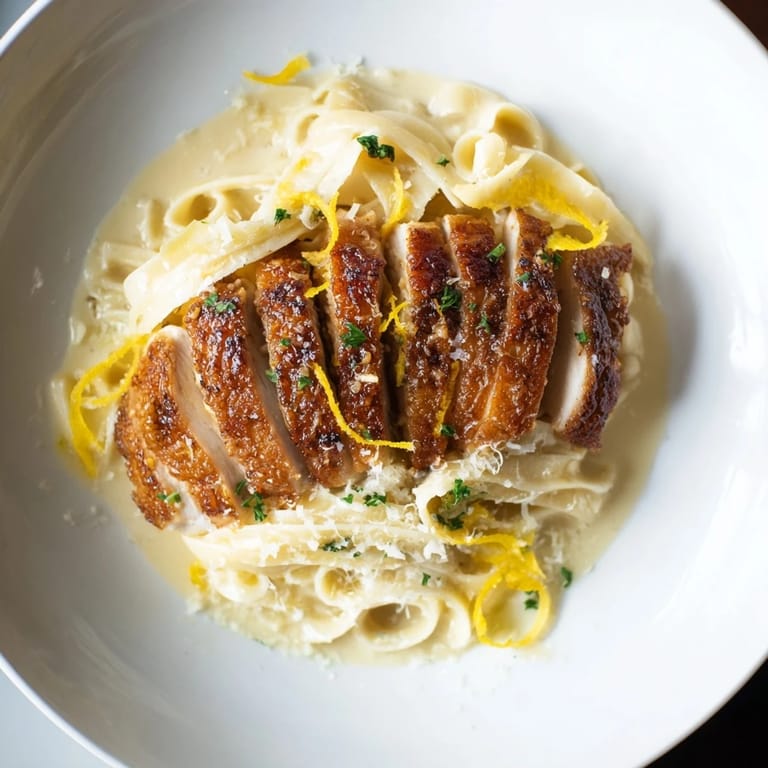
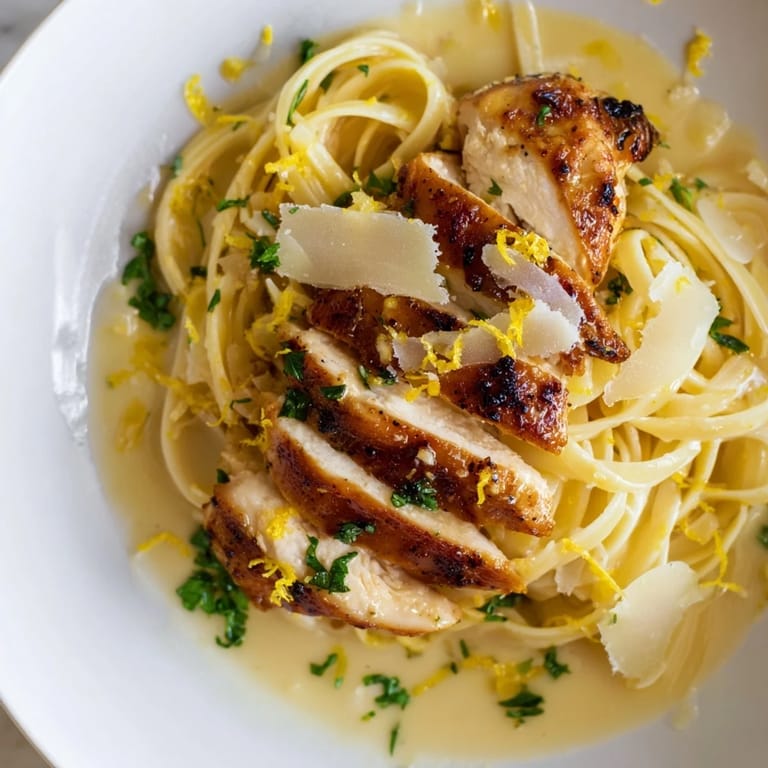
- Let the chicken sit for a few minutes so the juices redistribute, then slice it thin so you get that beautiful contrast between the caramelized crust and the tender meat in every bite.
- Cook Your Pasta:
- Salt your water generously and cook the pasta until it's just past al dente—you want a tiny bit of resistance, because it'll continue cooking slightly when you toss it with the sauce. Reserve half a cup of starchy pasta water before you drain everything else.
- Build the Sauce:
- Melt butter and olive oil together, add your minced garlic, and let it become fragrant—about a minute, no longer. Pour in lemon zest and juice, watching the pan brighten with that beautiful color.
- Cream and Cheese:
- Pour in the heavy cream and let it come to a gentle simmer, then add the Parmigiano-Reggiano slowly, stirring constantly so it melts smoothly without breaking or becoming grainy. This is where patience matters.
- Bring It Together:
- Add your drained pasta to the cream sauce and toss gently, adding pasta water a splash at a time until you get that silky consistency where the sauce clings to every strand without pooling.
- Plate and Finish:
- Divide the creamy pasta among bowls, top with sliced brûléed chicken, then shower everything with extra lemon zest, more Parm, and fresh parsley for brightness and color.
 Save
Save There's something almost magical about the moment when you crack through that caramelized crust with your fork and the sweetness gives way to creamy, lemony pasta underneath. It's unexpected and delicious and feels a little bit like you're eating something you shouldn't, which is exactly the point.
The Magic of Brûléeing at Home
I used to think you needed fancy equipment to brûlée, but honestly, a kitchen torch is one of the best thirty-dollar investments I've made. The moment you hear that little hiss and see the sugar start to bubble and caramelize, you feel like you've unlocked some secret culinary power. If you don't have a torch, the broiler works perfectly fine—just watch it like a hawk because the line between golden and burnt is razor-thin, and you'll learn that lesson the hard way exactly once.
Why Lemon and Cream Are Best Friends
On paper, lemon and cream shouldn't work as well as they do—acid and fat, brightness and richness, summer and indulgence all at once. But when you taste them together, especially when the lemon is fresh and the cream is silky, something almost magical happens. The brightness of the lemon prevents the cream from feeling heavy, and the cream softens the lemon's sharp edges, making the whole thing feel balanced and sophisticated instead of one-dimensional.
Making This Dish Your Own
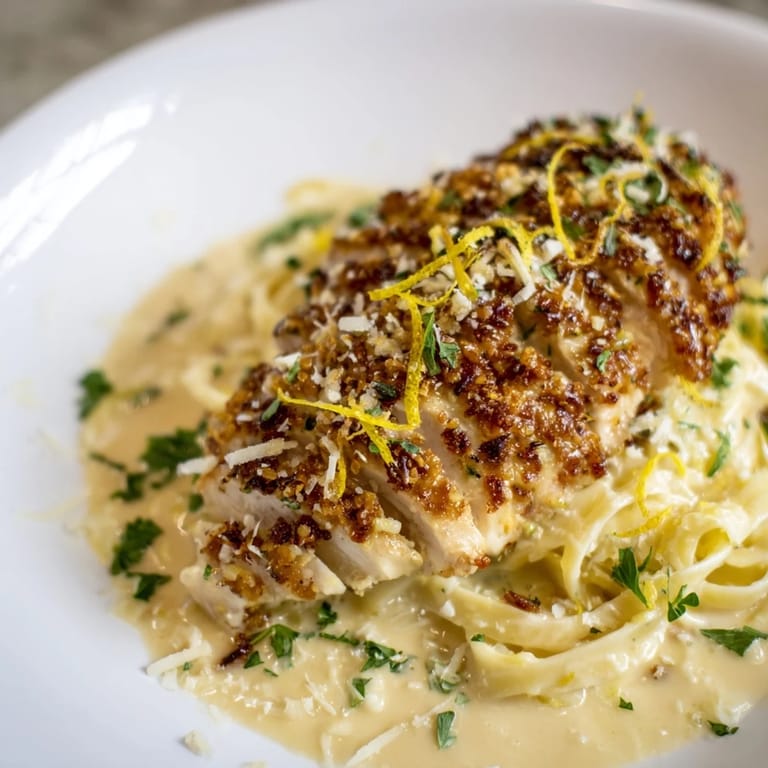
This recipe feels refined, but it's also flexible enough to make your own. Some nights I'll add a handful of fresh spinach to the sauce in the last minute, watching it wilt into a silky green that looks restaurant-worthy. Other times I'll crisp up some breadcrumbs in butter and scatter them on top for texture, or toss in a few capers for a briny edge that cuts through the richness.
- Toast panko breadcrumbs in butter and garlic, then scatter them over the finished dish for a satisfying crunch that contrasts beautifully with the creamy sauce.
- If you want to make it lighter, swap the heavy cream for crème fraîche or even mascarpone thinned with a splash of pasta water—the flavor shifts but stays delicious.
- Fresh herbs beyond parsley matter too—dill, tarragon, or even a whisper of thyme can shift the entire mood of the dish.
 Save
Save This dish taught me that sometimes the best ideas come from the strangest places—in this case, a dessert-inspired crust on a savory main course. It's a reminder that cooking is about play and curiosity as much as technique, and that the meals we remember aren't always the ones that follow tradition; they're the ones that surprise us.
Recipe Questions & Answers
- → How do I achieve a perfect brûlée crust on the chicken?
After seasoning and searing the chicken, sprinkle granulated sugar evenly on top and use a kitchen torch or broiler to caramelize until golden brown, forming a crisp, flavorful crust.
- → Can I substitute the heavy cream with another ingredient?
Crème fraîche is an excellent alternative for a tangier finish, adding a subtle depth while maintaining the sauce's creaminess.
- → What pasta type works best for this dish?
Linguine or spaghetti are ideal as they hold the creamy lemon sauce well and complement the texture of the sliced chicken.
- → How do I prevent the sauce from becoming too thick or thin?
Use reserved pasta water gradually to adjust sauce consistency, aiming for a smooth, silky texture that coats the pasta evenly.
- → Are there any suitable garnishes to enhance flavor and presentation?
Extra lemon zest, freshly chopped parsley, and additional grated Parmigiano-Reggiano add brightness and visual appeal.
- → What wine pairs well with this pasta and chicken combination?
Crisp white wines like Sauvignon Blanc or Pinot Grigio complement the citrus and creamy elements without overpowering the dish.