 Save
Save I'll never forget the year my grandmother insisted we arrange the turkey and vegetables in a chain pattern across the table, explaining how she wanted to honor the Mayflower's journey while bringing everyone closer together. That Thanksgiving, as we passed dishes along the overlapping rows of golden-roasted turkey and caramelized root vegetables, I realized this wasn't just about the food anymore—it was about the story we were telling with every slice and spoonful.
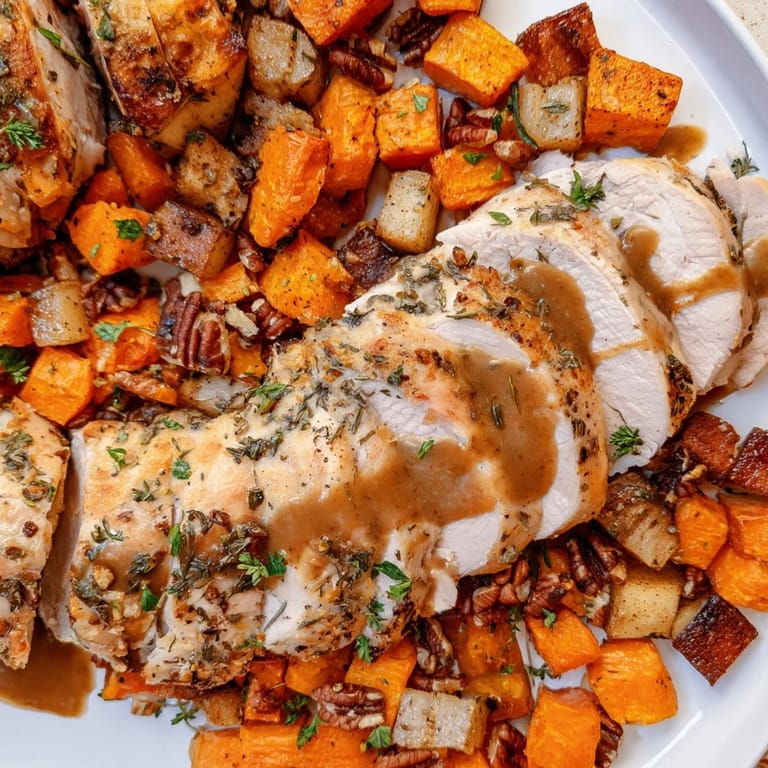
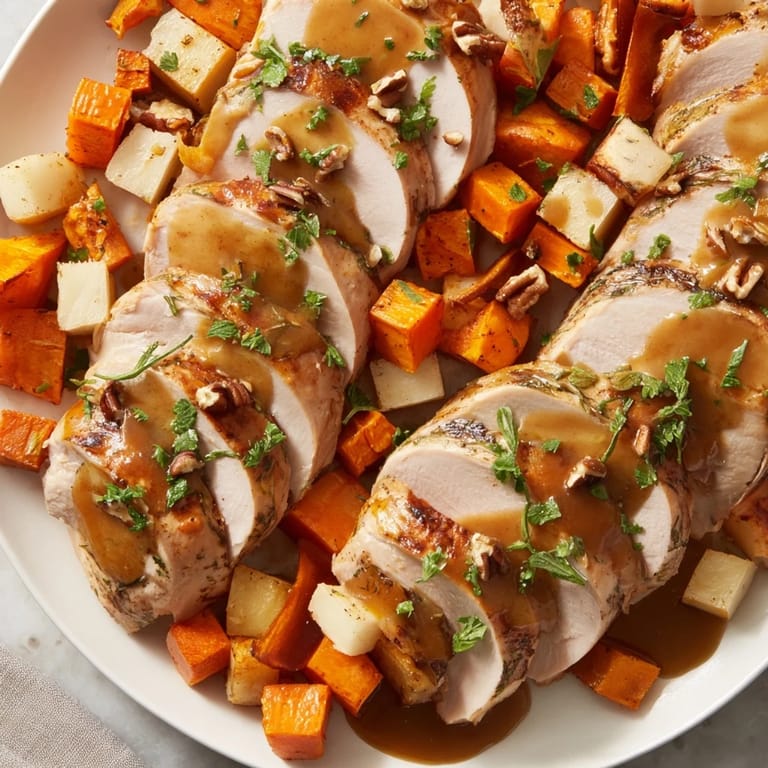
I remember my sister's face when she first saw the finished platter—how her eyes traced the overlapping links of turkey and vegetables, how she said it looked like we'd captured autumn itself on a plate. That's when I knew this recipe had become more than just Thanksgiving dinner; it had become our family's way of saying we're all connected, all moving forward together.
Ingredients
- Boneless turkey breast, skin on (1.5 kg): The skin-on is non-negotiable here—it protects the meat while roasting and gives you something golden to show off. I learned this the hard way after a dry, sad turkey year
- Olive oil (4 tbsp total): Split between the turkey and vegetables, it's your silent partner in achieving that deep caramelization that makes everything taste like autumn
- Dried thyme and sage (1 tsp each): These aren't fancy additions—they're the backbone of flavor, earthy enough to make the turkey taste like itself but elevated
- Root vegetables (carrots, parsnips, sweet potatoes, celery root): Cut them all to roughly the same size so they roast evenly and finish at the same golden moment—a lesson I learned after pulling out some vegetables raw while others turned to charcoal
- Smoked paprika and ground cumin (1 tsp and ½ tsp): These spices add warmth and a subtle smokiness that makes people ask what your secret is
- Chicken or turkey stock (500 ml): The foundation of your gravy—fresh stock makes a noticeable difference, but good quality matters more than whether you make it yourself
- Cornstarch (2 tbsp): Your secret weapon for silky, lump-free gravy without flour if you're going gluten-free
- Fresh parsley and toasted pecans for garnish: These final touches add color and crunch, turning a rustic dish into something that photographs beautifully
Tired of Takeout? 🥡
Get 10 meals you can make faster than delivery arrives. Seriously.
One email. No spam. Unsubscribe anytime.
Instructions
- Prepare your oven and season the turkey:
- Set the oven to 200°C and let it heat fully while you pat the turkey dry and rub it generously with olive oil and your herb blend. This is the moment that sets everything up for success—the dry skin will crisp beautifully, and the herbs will infuse as the meat roasts.
- Roast the turkey until it's golden and perfectly cooked:
- Place it skin-side up in your roasting pan and let it go for about an hour and fifteen minutes, until the thickest part reaches 74°C inside. You'll smell the thyme and sage filling your kitchen, a smell that means Thanksgiving is actually happening. Don't skip the foil tent for the last twenty minutes if the skin is browning too fast—you want it golden, not burnt.
- Prepare and roast the vegetables while the turkey cooks:
- Toss your vegetables with oil and spices until every piece is coated, then spread them on a sheet pan in a single layer. They need room to caramelize, not steam. Stir them halfway through so they brown evenly on all sides, about forty to forty-five minutes total. You'll know they're done when the edges are deeply golden and a fork goes through the sweetest ones easily.
- Make the gravy while everything rests:
- Melt butter in a saucepan and whisk in cornstarch to create a smooth paste, then slowly add your stock while whisking constantly—this is where lumps try to hide, so don't rush it. The mixture will thicken as it simmers, and that's when you know you're moments away from gravy that tastes like comfort itself.
- Rest the turkey and assemble the chain:
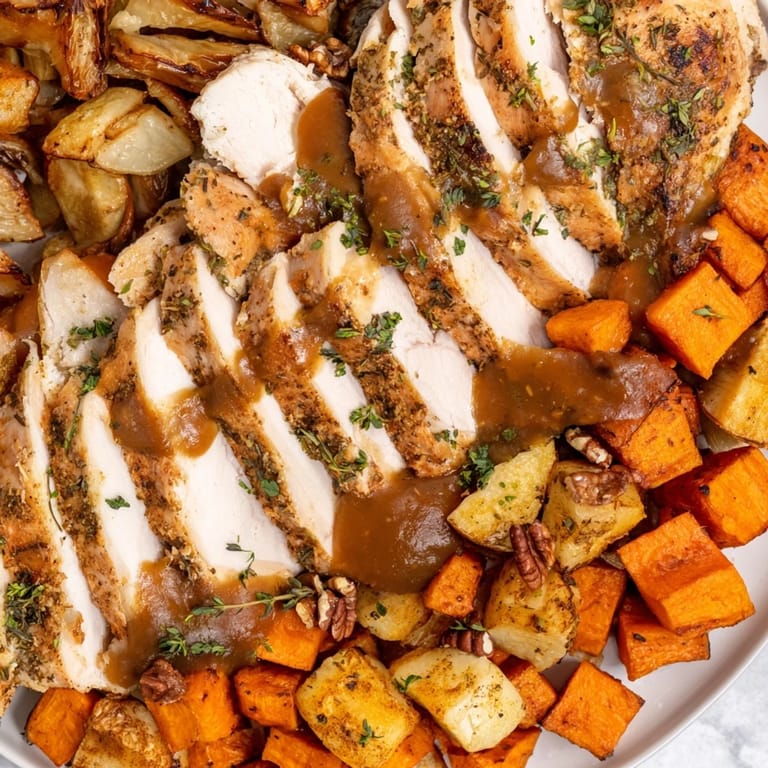
- Let the turkey rest for fifteen minutes—this lets the juices redistribute so every slice stays tender. Then arrange your vegetables and sliced turkey in overlapping rows on a platter, each piece slightly covering the last like links in a chain. Drizzle everything with your silky gravy, then scatter parsley and pecans across the top. Step back and admire what you've made.
 Save
Save There was a moment last year when my youngest pointed at the platter and said it looked like a story—how the turkey and vegetables linked together told the tale of a journey, of gratitude, of everyone coming home. In that instant, I understood why my grandmother loved arranging food this way. It wasn't just about feeding people; it was about reminding them that we're all part of something bigger than ourselves.
The Roasting Window and Why Timing Matters
The beauty of this dish is that both the turkey and vegetables roast at the same temperature, but they don't need to start at exactly the same moment. I've learned that putting the vegetables in about twenty minutes after the turkey gives you a slight advantage—they'll finish golden and crispy right as the turkey hits that perfect temperature. If you're worried about timing, remember that vegetables can hold warmth on the platter for ten to fifteen minutes without suffering, so don't panic if everything isn't done simultaneously. That said, nothing makes you feel like a more composed cook than having the platter assembled and gorgeous the moment someone asks when dinner's ready.
Variations and Seasonal Swaps
This recipe is forgiving enough to welcome your favorite vegetables and happy enough to adapt to what's in season and in your market. Roasted Brussels sprouts add an earthy bitterness that balances the sweetness perfectly, while beets bring jewel tones that make the platter even more striking. I've made this with fennel, rutabaga, and even thick-cut parsnip coins, and each variation tells a slightly different story. The key is keeping pieces roughly the same size and not crowding your pan, so everything gets that crucial caramelization rather than steaming.
The Gravy—Why It Matters More Than You'd Think
A silky, well-seasoned gravy is what transforms this from a nice plate of food into something that feels like home on a plate. The soy sauce in this version adds a savory depth that makes people wonder what your secret ingredient is, and honestly, it's become my favorite move. If you're making it for someone who can't have soy, tamari works beautifully and keeps it gluten-free. I always make the gravy while the turkey is resting, so I'm not adding another step once plating begins. Pro tip: taste the gravy before serving and adjust the salt, pepper, and even a splash of stock if it's too thick—this is your moment to make it exactly right.
- Let the gravy simmer for the full five to seven minutes so the cornstarch thickens completely and loses any raw starch flavor
- If you make a mistake and your gravy breaks or gets lumpy, strain it through a fine sieve and start fresh—it's only a few minutes of work and saves the whole dish
- Leftover gravy reheats beautifully and makes turkey sandwiches the next day taste like they're straight from a restaurant
 Save
Save Every time I make this dish, I'm reminded that some recipes are about more than nourishment—they're about the people we're feeding and the moments we're creating. This one has become our family's way of saying thank you, of celebrating togetherness, of honoring where we've come from while looking forward to where we're going.
Recipe Questions & Answers
- → What vegetables are used in the roasted medley?
The medley includes carrots, parsnips, sweet potatoes, and celery root, all seasoned with smoked paprika and cumin for a warm, earthy flavor.
- → How is the turkey prepared for roasting?
The turkey breast is rubbed with olive oil, dried thyme, sage, salt, and pepper, then roasted until tender and juicy.
- → Can this dish accommodate dietary restrictions?
Yes, it can be made gluten-free by using gluten-free stock and tamari soy sauce. A vegetarian version swaps turkey for roasted portobello mushrooms.
- → How is the gravy thickened and flavored?
Butter and cornstarch create the base, with stock and soy sauce added for savory depth. It's simmered until thick and smooth.
- → What is the significance of the chain-like arrangement?
The linked rows symbolize the Mayflower’s journey and the bonds of community, adding meaning to the festive presentation.
- → Are there suggestions for additional flavors or sides?
Adding roasted Brussels sprouts or beets enhances color and earthiness. Cranberry sauce provides a tangy contrast to the savory elements.