 Save
Save The first time I assembled a champagne waterfall board, I was convinced I'd invented something revolutionary—until my friend gently pointed out I'd simply made a fancy charcuterie board with a tipped-over wine glass. But that moment of mild embarrassment faded the instant guests arrived and gasped at the sight of grapes and fruit cascading down the board like edible confetti. There's something almost theatrical about the setup that transforms a simple spread into an event, and I've been hooked ever since.
I made this board for my sister's engagement party last spring, and watching her carefully arrange the raspberries while sipping prosecco told me everything I needed to know about why people love these things. It wasn't really about the food at all—it was the act of gathering, of abundance spread before you, of permission to pick and sample without ceremony.
Ingredients
- Brie: Get it sliced fresh from the counter if possible—pre-packaged brie tends to sweat when it sits out, and you want it looking pristine.
- Aged cheddar: The sharp bite cuts through all the sweetness from the fruits and honey, so don't skimp on quality here.
- Goat cheese: Crumbled rather than sliced, it catches the light and adds visual contrast to the creamy cheeses.
- Prosciutto: Fold it loosely into waves instead of neat piles—it looks more generous and actually tastes better with more surface area exposed to air.
- Salami: Go for whole slices rather than pre-packaged; the difference in flavor and appearance is worth the five minutes it takes to slice.
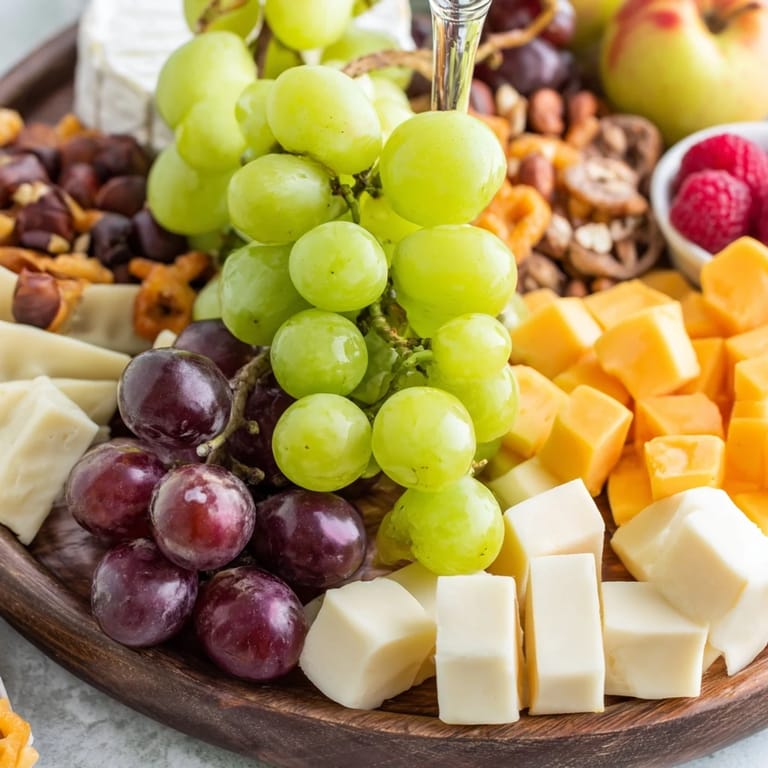
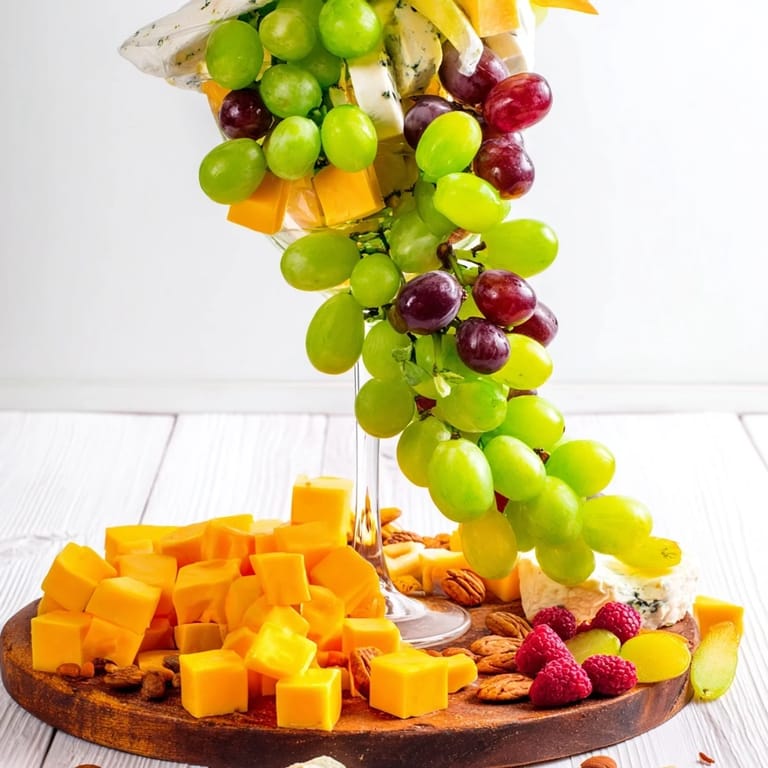
- Green and red grapes: These are your waterfall heroes—choose firm ones that won't roll off the board the moment someone looks at it funny.
- Pears and apples: Slice these last and toss with a tiny bit of lemon juice to prevent browning; this step feels paranoid until you realize how quickly cut fruit oxidizes.
- Raspberries: Buy them fresh the day of, or they'll collapse into sad mush.
- Candied pecans: Make them yourself if you have time—store-bought versions are fine, but homemade ones taste like actual celebration.
- Roasted almonds: Unsalted is the move; they complement the sweet elements without competing for salt with the charcuterie.
- Assorted crackers: Vary the shapes and textures—some thin and crispy, some sturdier, some herbed.
- Baguette: A fresh one from a real bakery, sliced on an angle so each slice has maximum surface area for toppings.
- Honey and fig jam: Nestle these in small dishes or ramekins so guests can dip without making a mess.
- Edible flowers and mint: These are garnish magic—they turn a board into art and add a whisper of flavor.
Tired of Takeout? 🥡
Get 10 meals you can make faster than delivery arrives. Seriously.
One email. No spam. Unsubscribe anytime.
Instructions
- Set the stage with your glass:
- Position your champagne coupe at the center of your board, tilted on its side at a gentle angle where it feels balanced and won't tip further. This is your focal point, so take a moment to get it right.
- Create the cascade:
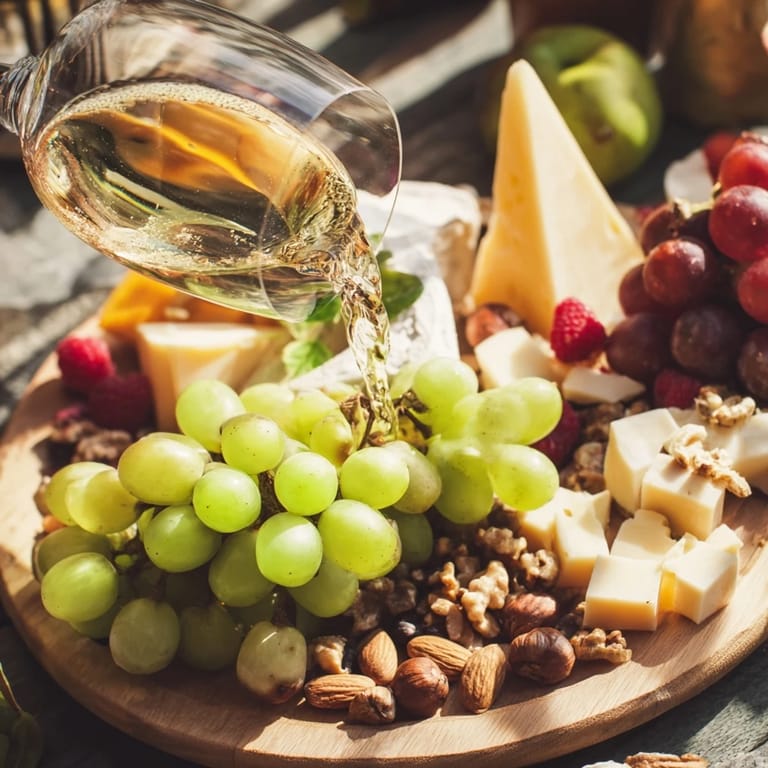
- Arrange grapes flowing out from the glass and down the board in loose clusters, as if they're actively tumbling. The randomness is what makes it look real—perfectly straight lines feel staged.
- Layer in the fruit:
- Fan your pear and apple slices around and beneath the grapes to extend the waterfall effect. This is where the composition really comes together.
- Distribute the cheese:
- Cluster your three cheeses in small groups scattered around the base of the glass and along the fruit's path. Think of it as islands in an edible sea rather than one solid mass.
- Add the meats (if using):
- Fold your prosciutto into loose, organic piles and scatter salami slices where they'll catch light and add color contrast.
- Fill in with texture:
- Scatter your candied pecans, roasted almonds, and raspberries throughout empty spaces. These aren't just fillers—they add color pop and give guests something sweet to balance the savory elements.
- Frame with crackers and bread:
- Arrange crackers and baguette slices around the board's edges where they're easy to grab without disturbing the composition.
- Settle in the condiments:
- Nestle small bowls or ramekins of honey and fig jam among the ingredients so they feel integrated rather than afterthoughts.
- Finish with flourish:
- Scatter edible flowers and fresh mint sprigs across the board just before serving—this final layer transforms everything and looks effortless.
- Serve with ceremony:
- Chill your champagne separately until the last moment, then present the board alongside it for maximum impact.
 Save
Save My favorite memory from making these boards isn't from a fancy event—it's from a quiet Thursday night when my neighbor stopped by and I threw one together with whatever was in my fridge. Watching her face light up as she realized this was an actual meal and not just decoration made me understand that the magic isn't in perfection; it's in the generosity of presentation.
The Art of Arrangement
There's a Goldilocks zone with these boards where you want enough abundance to feel impressive but not so much that it looks chaotic or wasteful. I learned this by over-packing my first board until it looked more like I'd upended a grocery store than curated a spread. The key is restraint mixed with generosity—choose quality over quantity and let negative space breathe. Odd numbers of cheese clusters, scattered rather than lined up, look infinitely more intentional than symmetrical arrangements. Trust that less really can be more when everything on the board is genuinely worth eating.
Seasonal Variations That Keep Things Fresh
I've made versions of this board through every season, and it's taught me that following the market instead of forcing specific ingredients makes everything taste better and keeps the board from feeling stale. Summer brings stone fruits and fresh berries that practically arrange themselves; fall gets figs and roasted grapes; winter goes deep with dried fruits and spiced nuts. Spring is when I go lightest with delicate herbs and the first tender fruits available. Each season makes you rethink the composition, which is part of the fun—you're never bored because you're never making the same board twice.
Making It Memorable
The board itself is just the beginning; what makes people remember it is the context and the invitation to linger. Serve it when people can actually sit and enjoy it rather than rushing through an event. The champagne glass tilt becomes a conversation starter, the abundance gives permission to graze and chat, and somehow the meal becomes less about food and more about the time spent together. I've started taking photos of these boards not to post online but to remember the specific gathering, the people who were there, and what we talked about while picking at cheese and grapes.
- Chill all the ingredients beforehand so the board stays fresh longer.
- Have napkins nearby and small plates so guests don't feel awkward eating.
- Consider dietary restrictions when planning your cheese and meat selections.
 Save
Save This board has become my go-to for celebrations because it works at any season, looks stunning with minimal effort, and genuinely tastes good. More importantly, it gives people permission to relax and enjoy each other's company without the pressure of a formal meal.
Recipe Questions & Answers
- → What cheeses work best on this board?
Soft brie, aged cheddar, and crumbled goat cheese provide a variety of textures and flavors that complement the fruits and nuts.
- → Can I make this board vegan-friendly?
Yes, simply use plant-based cheeses and omit any charcuterie to suit a vegan preference.
- → How do I create the waterfall effect with the fruits?
Place a champagne coupe glass on its side at the center and arrange green and red grapes spilling out, cascading down the board alongside sliced pears and apples.
- → What nuts are recommended to add texture?
Candied pecans and roasted almonds offer crunchiness and complement the sweet and savory elements on the board.
- → How should I serve the condiments on the board?
Small bowls of honey and fig jam are nestled among the ingredients to provide sweet dipping options that enhance the overall flavor.
- → Are there suggestions for seasonal variations?
Consider swapping in figs, pomegranate seeds, or dried apricots depending on availability to keep the board fresh and interesting.